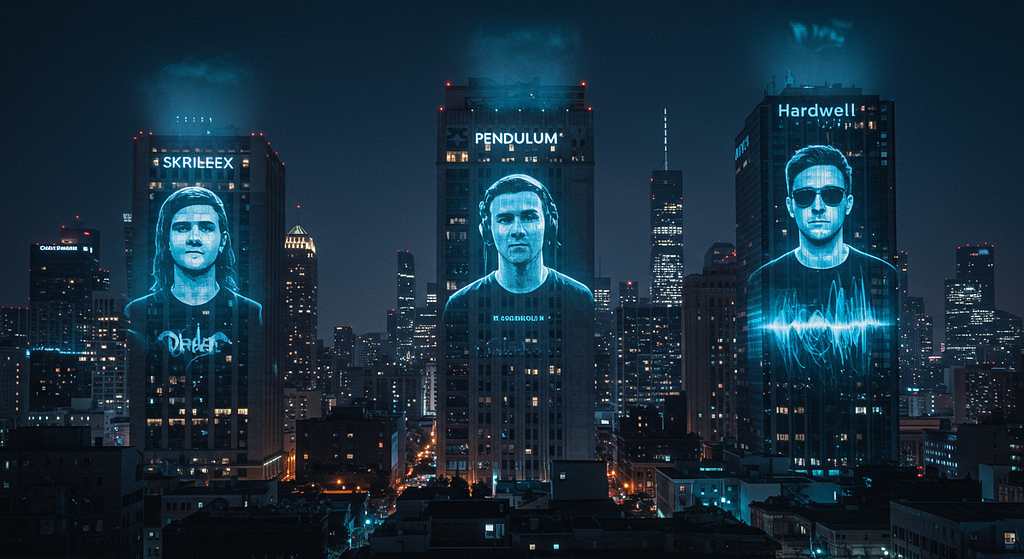
What do Skrillex, Pendulum, and Hardwell have in common in 2025? They’re all part of dance music’s most unexpected comeback, and there’s a second, quieter wave forming behind them.
If you’ve spent any time scrolling through Ultra Music Festival clips or tuning into the circuit of global EDM events this year, one thing is clear: the 2005–2014 era of electronic dance music is having a moment. Call it nostalgia. Call it the Spotify algorithm finally working in our favor. Call it the “ravers-turned-parents” pipeline. Whatever it is, the EDM boom generation is back in the building, and the energy feels… familiar.
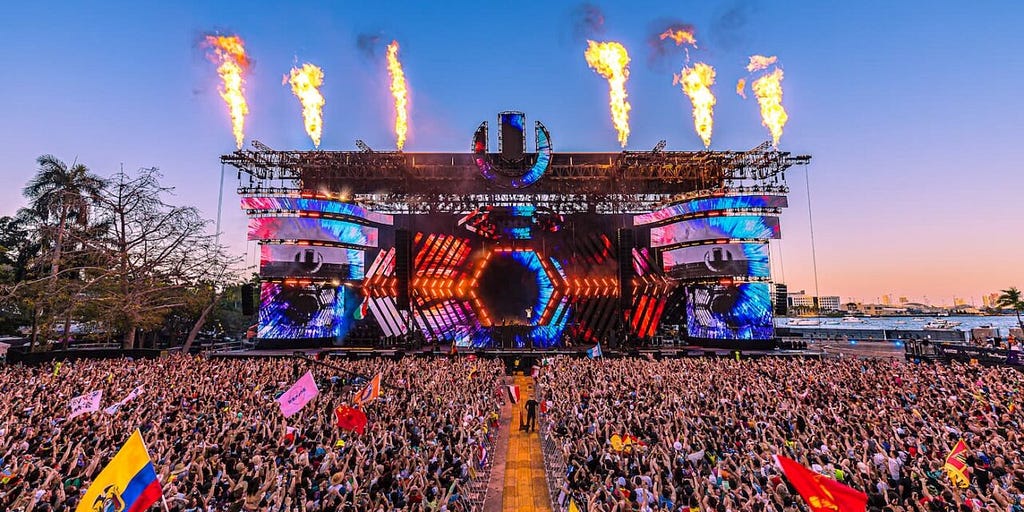
This year’s Ultra Music Festival felt like a seismic shift. Skrillex returned for the first time in a decade, delivering a set packed with throwback selections that reminded everyone exactly why he became a movement. Pendulum went B2B with deadmau5 in a surprise pairing that shook the mainstage. These weren’t just performances, they were flashpoints, igniting a resurgence rooted in memory as much as momentum.
And it wasn’t just a moment, it was the mission. For its 25th anniversary, Ultra booked a lineup that doubled as a love letter to EDM’s golden years: Skrillex, Tiësto, Hardwell, Armin van Buuren, Axwell, and Zedd all returned to top billing, making the 2025 mainstage feel like a time capsule with a new pulse. Even Tomorrowland leaned in, with Martin Garrix and Swedish House Mafia reclaiming headline slots they helped build a decade ago.
But make no mistake: this isn’t just a greatest-hits parade. This is the beginning of something bigger.
,
The resurgence is real, and it’s already in motion.
We’re not talking about deep house trickling back into Instagram stories, or techno being rebranded as minimalism for architecture students. This is something louder. Brighter. More reckless. This is the return of the crowd-pleasers, the names that once sold out arenas and soundtracked road trips, late nights, and first loves.
Some never left. Zedd still headlines global festivals and Top 40 playlists alike. Martin Garrix reinvented himself for each passing wave of dance music trends and somehow never slipped. Tiësto might as well be carved into the mainstage itself. These names evolved with the scene, riding pop collaborations and EDM’s blurring boundaries to keep their flame alive.
But others, the ones we thought had quietly slipped into the archives, are suddenly front and center again.
Pretty Lights returned after years of silence with a full tour and a live show that feels like a lucid dream, immersive, analog, and unapologetically spiritual. His comeback isn’t just a nod to the past; it’s a reimagining of it, fusing his signature warmth with something far more cinematic. Nero, silent for years, dropped a surprise live set that felt like stepping into a time capsule sealed with sub-bass. Hardwell disappeared, reemerged, and came back not as a nostalgia act, but as something darker, more mature, more earned. These are not retreads, they’re reintroductions.
And as those names rise, the air starts to shift. Because if they can come back, what about the rest?
,
There’s a murmur in the scene. You can hear it backstage, feel it in after-movie YouTube comments, see it flicker in Reddit threads and fan-made Spotify playlists titled “OG Vibes Only.”
A second wave is forming, not of the acts already back onstage, but of the ones just beyond the spotlight.
These are the names we haven’t heard in a while, the ones not yet printed on Ultra flyers or hidden in surprise set slots. But their presence lingers, like an echo from a set you can’t quite remember but will never forget.
They’re not gone. They’re waiting.
And if you need proof, just look at what’s creeping back into the mix. Tracks like Edward Maya’s “Stereo Love” and Cascada’s “Everytime We Touch” have become unlikely TikTok anthems, ricocheting across remixes, CapCut edits, and college arenas alike. “Heroes” by Alesso lit up EDC Orlando like it was 2014 all over again, and “Clarity” had festival crowds belting their lungs out at Ultra as if a decade hadn’t passed. These aren’t just trends, they’re returns.
These are the producers who lived at the intersection of big-room euphoria and blog-house chaos, who once dominated YouTube channels with neon thumbnails and half a million views. Their music wasn’t just heard, it was felt. They made the songs that soundtracked your best nights and your worst decisions, the kind of anthems that belong to sweaty clubs and unfiltered joy.
They still have fans. Still have firepower. Still carry enough brand recognition that the right set or remix could send them ricocheting back through the algorithm. The question isn’t whether they’re capable of returning.
It’s whether they’ll take the shot.
And some already have. The Bloody Beetroots have been teasing festival slots again. Digitalism slipped a remix into the bloghouse bloodstream that caught fire on SoundCloud. Boys Noize has been hinting at live edits of tracks we haven’t heard in a decade. It’s small, but it’s movement.
These aren’t headlines yet, but they’re footsteps. Signs. A flicker just before the spotlight returns.
But the silence is breaking.
,
Some are quietly active, still touring, still releasing music, still showing up in ways that don’t always trend but always connect. Others have retreated into the background, either by choice or by timing. A few have taken detours into techno, melodic house, or leftfield production, building legacies outside the main funnel of mainstream electronic music.
But when the nostalgia wave hits, it doesn’t check your current stream count. It just asks one thing: do people remember how you made them feel?
And for many of these artists, the answer is still a resounding yes.
,
You can almost see the shortlist forming in real time.
Not in any official flyer or press release, but in the corners of dance community imagination. The whispered names. The ones we want to believe are just one set away from a full-circle moment. The ones who could walk back onto a stage tomorrow and earn the kind of cheer that has nothing to do with algorithms, and everything to do with memory.
There’s Laidback Luke, a technical wizard who never lost respect in the DJ world, even as his mainstream presence dimmed. There’s Dada Life, still synonymous with absurdity and excess, with anthems that sound like confetti and chaos. Morgan Page, with his unmistakable warmth and timeless vocal progressions, has quietly stayed consistent, like a heartbeat waiting for the world to catch up again.
Wolfgang Gartner still looms, a name that once felt like lightning bottled in Ableton, with electro house records that built dancefloor tension like nobody else. You hear his influence every time a bassline snarls with just the right amount of menace.
Tritonal still tours. Their sound has evolved. Their fans have stayed. They never truly fell, they just stopped being loud about it. But the foundation is still there. A remix, a high-profile B2B, or the right nostalgic co-sign, and they’re back in the bloodstream of the scene. In early 2025, they dropped “Watch Us Glow,” a shimmering callback to their classic progressive style that found traction on streaming playlists, proof their new work still resonates.
Their presence dovetails with the broader revival of progressive house, a genre that’s seeing a real resurgence in 2025 thanks to renewed interest and artists like Audien reigniting the flame through events like the Progressive House Never Died series. It’s not just a nostalgic tag; it’s a living sound returning to center stage.
,
And somewhere in that same lineage are Porter Robinson and Madeon, artists whose soundtracks didn’t just move crowds but shaped identities. Their returns were quieter, more introspective, but no less profound, and if this wave continues to swell, they might just find themselves in the spotlight again, not because they adapted to the trend, but because the scene finally caught up to them.
Or Bingo Players, artists whose sets weren’t just memorable, they were moments. Banana suits and champagne showers, crybaby synths and festival hooks that made your chest shake. They understood the assignment before we even had words for it. They didn’t just make bangers, they made joy. And that joy? It’s still waiting in the wings.
In the shadows of the spotlight, artists like Kill the Noise and Feed Me continue to stir, moving under the surface with cult-favorite status that, in the right moment, could snap back into the mainframe. Their worlds were always more twisted, more textured, and in a time when fans crave substance again, that weight matters.
RüfüS Du Sol, who helped define the emotional and melodic side of the post-EDM-boom era, are riding high on the momentum of their 2025 “Inhale/Exhale” tour. Their evolution from underground darlings to festival staples is a testament to how this genre arc still holds power, and how audiences are embracing feeling as much as spectacle.
That’s the magic of this wave. It’s not about scale, it’s about readiness.
Because this isn’t a competition. It’s a timing game. The difference between resurgence and irrelevance isn’t measured in talent, it’s measured in movement. In who seizes the moment and who lets it pass by, whether by choice, burnout, or just bad luck.
And that moment? It’s right now.
,
The metrics agree: from “Bulletproof” soundtracking TikTok empowerment trends to a 50% surge in DnB content online, these old anthems are finding their way back into headphones and headlines. The feelings may be timeless, but the movement is very real, and it’s happening right now.
Not next year. Not after the next trend settles. Right now, when Gen Z is discovering old-school festival anthems for the first time and longtime fans are looking for something that feels like home.
On platforms like TikTok and Reddit, younger fans are openly longing for the 2010s EDM aesthetic, sometimes without even realizing it’s retro. Trends like the “Bulletproof” empowerment edits or “Stereo Love” slow-mos are racking up millions of views. Meanwhile, fan threads on r/EDM celebrate the return of 2010s progressive house like it’s a lost religion. The energy is familiar. The audience is new.
The window is open, but not forever.
And if you needed proof that the moment is now, look no further than Skrillex, one of the scene’s most iconic architects, who just dropped a surprise 34-track mixtape that sounds like the past, present, and future of electronic music crashing into each other at once. Hosted by a phonk producer, packed with collaborators from Boys Noize to Jónsi, it’s not a comeback album, it’s a manifesto. Some of the tracks date back over a decade. Others feel born in the chaos of 2025 internet culture. But what ties them together is a feeling that’s unmistakable: the pulse of a generation that remembers. Skrillex didn’t just show up again, he showed everyone what remembering can sound like.
And the artists who sense that? They’re the ones who might just become the second wave of this comeback story. Not just a footnote to EDM’s history, but part of its living, breathing future.
,
There’s no formula for the perfect return. But there is a feeling.
It lives in the first kick drum of a set you didn’t expect to feel this much. In the drop from a song you forgot you remembered. In the crowd reaction that says: we’ve missed you.
These aren’t just names we’d like to see return. They’re names we still quietly believe in.
Names we hope are watching this wave roll in and remembering what it felt like to command it.
Because if they do?
The next cheer won’t be for the comeback.
It’ll be for the return of something we didn’t realize we’d been missing this much.