How Legacy EDM Artists Are Getting Left Behind While the Next Generation Thrives
This isn’t about streams. It’s about time. Time wasted. Momentum lost. Artists who had the world’s attention, and watched it flicker out because someone in a suit needed “more lead time.”
Meanwhile, a 19-year-old with a SoundCloud link and 17 TikToks just racked up 10 million streams.
The problem isn’t their production. It’s their release strategy, or more specifically, their label’s release strategy.
In a year where TikTok sets the tempo and Spotify algorithms crown the kings and queens of engagement, the traditional, label-driven release model is no longer just outdated. It’s a liability. And for many of the EDM artists who once defined the scene, that liability is turning into obscurity.
But here’s the thing, it’s not just inertia. It’s willful. It’s systemic. And at the center of it all is the one player that’s refusing to get out of its own way: the major label.
Let’s rewind. The 2005–2014 era of EDM gave us anthems that still echo through festival grounds, the ones that built memories, movements, and mainstages. Artists like Nicky Romero, Benny Benassi, and Dash Berlin weren’t just producers; they were moment-makers. But here’s the truth: their music, their brands, and their fanbases didn’t disappear. They just got trapped in a broken system.
That system? The old major label rollout model. Long lead times. Over-calculated marketing cycles. Bureaucratic delays that turn heat into lukewarm interest before a track even drops. In an age of short-form virality and algorithmic discovery, these slow-motion strategies are the kiss of death.
And the labels? They’re doubling down on it. Not adapting. Not evolving. Just grinding the same gears that worked in 2012 and wondering why nothing’s catching.
Want proof? Look at the numbers.
Major label YouTube channels, once the holy grail of premieres and visual campaigns, are drying up. Engagement is tanking. Impressions are evaporating. Channels that used to pull tens of thousands of views within 48 hours are now lucky to scrape a few hundred. And it’s not just because of content oversaturation. It’s because the content doesn’t move the needle anymore. It’s being fed to an audience that’s already migrated somewhere else.
Spotify playlists tell the same story. Once the backbone of label marketing plans, many of them now underperform drastically. Listeners aren’t flocking to them the way they used to. Spotify itself has shifted attention toward independent artists, with indie promotion now making up over 50% of new-music placements. These aren’t just dips. They’re red flags.
So what are labels doing about it? Mostly nothing. Or worse, they’re blaming the artists for not going viral, instead of recognizing that their infrastructure is rooted in a landscape that no longer exists.
Take Fred again.. for example. In just a few years, he’s gone from behind-the-scenes producer to headlining 77,000-cap stadiums, closing Coachella, and redefining what a modern EDM artist looks like. His secret? Constant output. Raw Instagram clips. Boiler Room sets with 38M views. Music released while the moment is still hot.
Or PinkPantheress, who built a global audience off TikTok snippets, 2-minute tracks, and a complete disregard for traditional timelines. Her songs hit platinum before some legacy artists could even get a release date cleared.
Even Skrillex, one of the few 2010s juggernauts still in the conversation, reinvented his approach by dropping albums with zero notice, selling out Madison Square Garden on a week’s warning, and letting the energy of the internet dictate the terms.
So what’s the difference? Why are some artists breaking through while others fade away?
It’s about speed. About control. About recognizing that music discovery no longer starts with a press release, it starts with a TikTok trend, a CapCut edit, a bootleg from a live stream. In 2025, the fans are the A&R. The algorithm is the gatekeeper. The moment is the marketing plan.
And major labels? They’re still focused on scheduling meetings.
Artists who understand this are not just surviving. They’re winning.
The Cost of Waiting
While some artists have figured out how to break free from the cycle, others haven’t been so lucky, or so quiet.
Raye: Seven Years in the Waiting Room
In 2014, Raye signed a four-album deal with Polydor Records. But despite a run of hit singles, her debut album never came. Not in 2016. Not in 2018. Not even in 2020. After seven years, Raye went public, breaking down on Twitter in 2021: “I’m sick of being slept on. I’ve done everything they asked.”
Polydor released her shortly after, and she released Escapism. independently. The track hit number one in the UK. At the chart ceremony, she stood crying, holding the plaque: “These are happy tears. I’m an independent artist. This is proof you should back yourself.”
Skrillex: Quiet Divorce, Loud Message
In late 2024, Skrillex revealed that his next release would be his last under Atlantic Records, ending a 15-year run. No big press release. Just a quiet message that he was done.
What followed? A Dropbox leak to fans, 14 hours before his new project dropped. No embargo. No embargoed press copy. Just music. On his own terms.
A Reddit comment summed it up: “Now he’s a free man. He can drop whatever he wants, when it actually matters.”
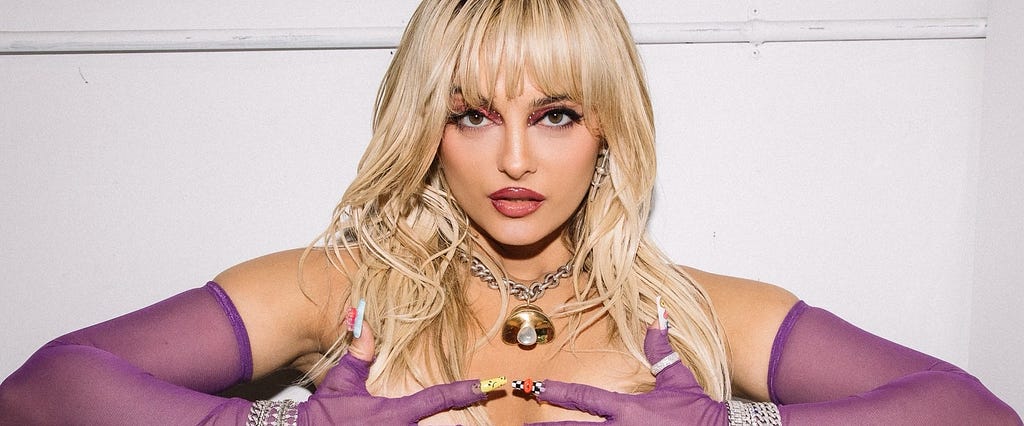
Bebe Rexha: “I’M FED UP”
In July 2024, Bebe Rexha dropped the corporate filter. On X (formerly Twitter), she wrote: “I could bring down a BIG chunk of this industry. I AM frustrated. I’ve been UNDERMINED.”
When fans asked if it was promo, she responded: “Promo? I have no marketing budget. I’m FED UP.”
That kind of burn doesn’t come from a PR plan. It comes from exhaustion.
Halsey: The Viral Video About Being Forced to Go Viral
In 2022, Halsey posted a TikTok exposing her label’s refusal to release her next single, unless she manufactured a fake viral moment first.
“I just wanna release music, man. I’m tired,” she said. The irony? That video became the viral moment. The label scrambled to respond, but the damage was done. Fans saw the mask drop.
These aren’t isolated incidents, they’re symptoms. Artists are getting delayed, disillusioned, and discarded because labels are still clinging to playbooks from a decade ago. And when fans find out? They don’t forget.
The Fans Are the Street Team Now
Labels used to control the rollout. Now it’s the fans.
They’re the editors, the curators, the marketers, cutting fan-cam edits, ripping unreleased tracks from live sets, and pushing songs up the algorithm ladder long before any playlist team gets involved. That 12-second video of Fred again.. dropping an unreleased ID in Tulum? It’s already viral on TikTok, ripped on Twitter, and uploaded to SoundCloud under 14 different filenames.
In 2025, the fandom isn’t a passenger. It’s the engine. If you wait too long to release, they’ll either lose interest, or release it for you.
Independence Isn’t a Risk, It’s a Shortcut
Hardwell came back from hiatus and dropped a full album on his own label, no radio push, no label strategy, and sold out arenas anyway.
Krewella’s newer projects aren’t charting, but they’re being released fast, raw, and on their terms, which is more than many of their peers can say.
Independent artists aren’t just surviving in 2025. They’re faster, freer, and often closer to the fans than anyone on a label’s release schedule.
Spotify’s own data tells the story: artists active on TikTok enjoy 4x the week-over-week streaming growth compared to artists with little or no TikTok footprint. 84% of the songs that entered the Billboard Global 200 in 2024 first went viral on TikTok. Those numbers aren’t a trend, they’re a new law of the land.
And legacy EDM acts? They’re often stuck waiting. For label signoff. For marketing budgets. For playlist placements that don’t come. Their social feeds go dark between cycles. Their releases trickle in once or twice a year. Meanwhile, younger artists are dropping music every month, sometimes every week, and letting fans dictate what sticks.
It’s not that the old guard lacks talent. It’s that the scene is now built for agility, and agility doesn’t survive a six-month marketing roadmap. And the labels? They’re still designing blueprints for a house that already burned down.
Even the fans have changed. They want quick hits, immersive content, and transparency. They want to see the project get made in real time. They want a front-row seat to the process, not a red carpet to the product.
So when someone like Dash Berlin, with millions of monthly listeners, releases something great, but only once every few quarters, it slips into the noise. When Benny Benassi’s biggest songs are still the ones he made in 2011, we’re not talking about a creative drought. We’re talking about an algorithmic one.
The EDM world isn’t rejecting its past. If anything, it’s more nostalgic than ever. But nostalgia alone won’t sustain you. Movement will.
And movement, in 2025, doesn’t wait for a release date.
It’s time for artists to stop asking if they’re being heard and start asking if they’re being seen, not in headlines, but in feeds. Not in streams, but in scrolls.
Because in a landscape where virality is the new venue, the artists who move fast will be the ones who last.
And those who don’t?
They won’t fade because they weren’t good enough. They’ll fade because they released like it was still 2014. And their labels? They’ll watch from the sidelines, still wondering why no one’s tuning in.
The industry didn’t forget these artists. It just moved faster than their labels would let them.