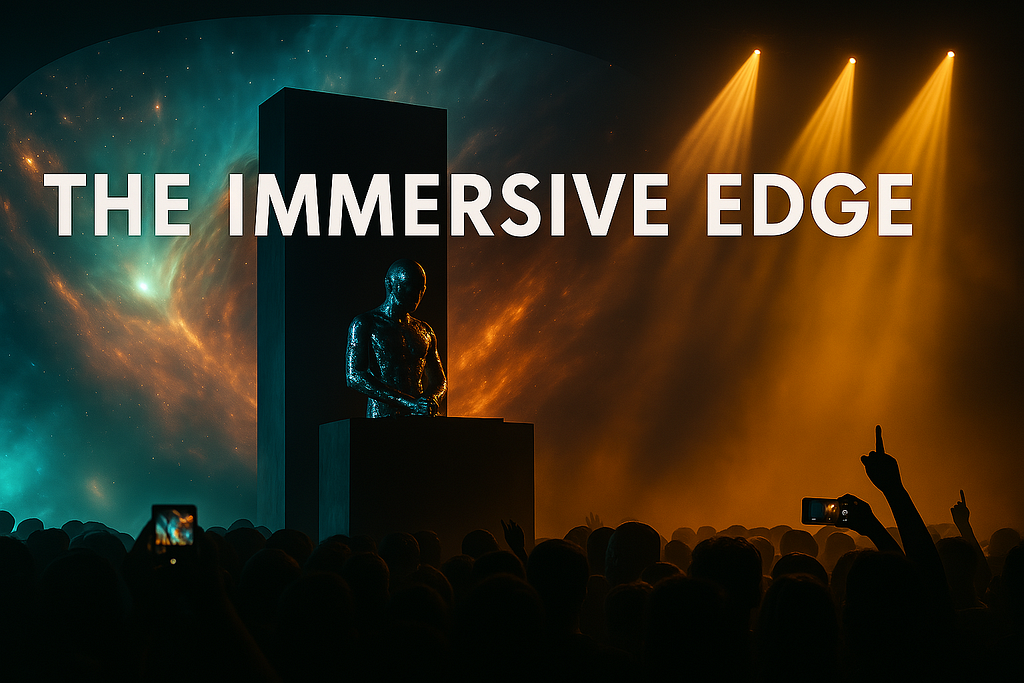
In a scene defined by volume and velocity, some artists have learned the quiet truth:
The most unforgettable stages aren’t the biggest, they’re the ones no one else can enter.
This is about the future of EDM, and why it belongs to the mythmakers.
There’s a moment, if you’ve been around long enough, where you start to feel the churn.
It’s not burnout, exactly. But something in your spine tugs when yet another big-room drop slams into the same formulaic breakdown. When a crowd pops not because of surprise, but because they’ve been trained to react like Pavlov’s ravers. When the lasers sync too perfectly to the four-on-the-floor and you can’t help but ask yourself, when did all this start feeling so modular?
That’s not nostalgia. That’s your instinct telling you the landscape’s shifting.
Because in 2025, the DJ deck isn’t dead, but it’s been dethroned. The artists cutting deepest into the culture aren’t the ones with the tightest sets or the flashiest visuals. They’re the ones who’ve made themselves unmistakable. The ones who step on stage and vanish into something bigger. Artists who, intentionally or not, have discovered the secret to longevity in a saturated genre:
If your performance can be transferred, it was never yours to begin with.
The Era of the Transferable Set
EDM has always flirted with commodification. That’s not a dig, it’s part of the genre’s power. Its openness, its remix culture, its plug-and-play nature gave us some of the most democratic explosions in music history.
But that same openness has a dark mirror: the endless replication of safe, easily marketable sets. Swap one DJ for another and the BPM barely hiccups. The lighting rigs stay the same. The crowd’s hands still rise on cue. It’s efficient. Profitable. It works.
Until it doesn’t.
Because in a landscape that’s modular by design, sameness becomes your death knell. And the fans, subconsciously or not, start to drift toward something they can’t explain as easily. Something with gravity.
This is where the non-transferable artist enters.
The Artists You Can’t Copy
Think of Gesaffelstein’s Coachella 2019 performance, not as a set, but as an event horizon. No LEDs, no lasers, no crowd banter. Just a black-suited figure standing motionless in front of a monolithic mirror. Bathed in backlight. Painted in chrome. The crowd saw no expression, no gesture. Only silhouette. Only authority. Only absence weaponized.
No one else could do that. Not because they lack the gear, but because without the core, it would crumble. If Marshmello tried that same setup, he’d look like someone forgot to charge the visuals. If Fred Again.. stood still in that mirror, we’d wonder if he’d had a breakdown. Gesaffelstein doesn’t just play minimal techno. He is the void. And everything, his gear, his lighting, his body language, enforces it.
This is what we call The Monolith: the artist who builds power through detachment. Think Daft Punk. Think early Justice. Think the artist who doesn’t need to dance, because the myth is already moving through the room.
And then flip the coin.
When the Gimmick Becomes the Mask
There’s a temptation to say this is all about costumes. That putting on a helmet or curating a lighting rig suddenly gives you mystery. But if you’ve ever seen an act that tried to be cryptic, only to collapse into confusion or cringe, you know better.
Take Marshmello. The helmet is a gimmick. That’s not an insult. It’s by design. It’s built for recognition, mass branding, and childlike joy. He’s the EDM version of a Pixar character. Fun, accessible, universal. But his mask is modular. Slap it on a cereal box, a Fortnite avatar, a cartoon cameo, it holds. Because it’s built to transfer.
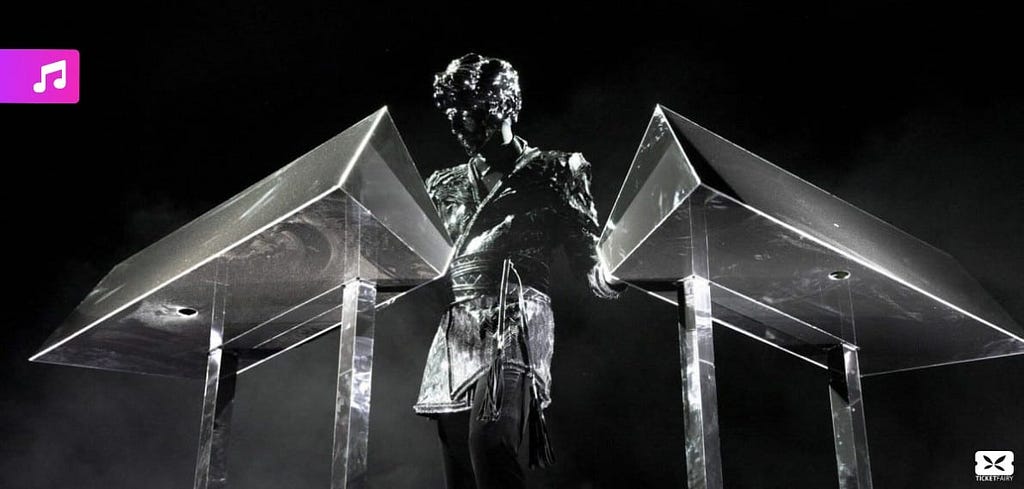
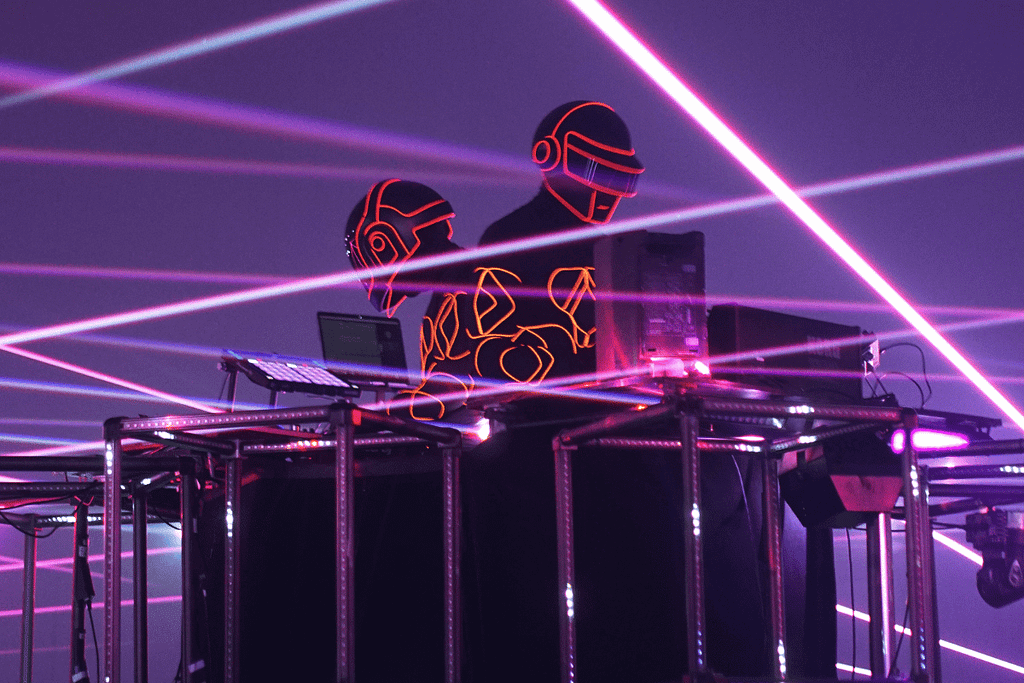
Contrast that with Daft Punk. Their helmets weren’t props. They were philosophical containers. They didn’t obscure identity, they created a new one. Robots exploring human emotion through sound. When they ended, they didn’t tweet a press release. They staged a ceremonial breakup video. In character. In lore.
That’s the chasm between The Mascot and The Myth. One exists for the crowd. The other rewrites reality.
The Human Package: Vulnerability as Concept
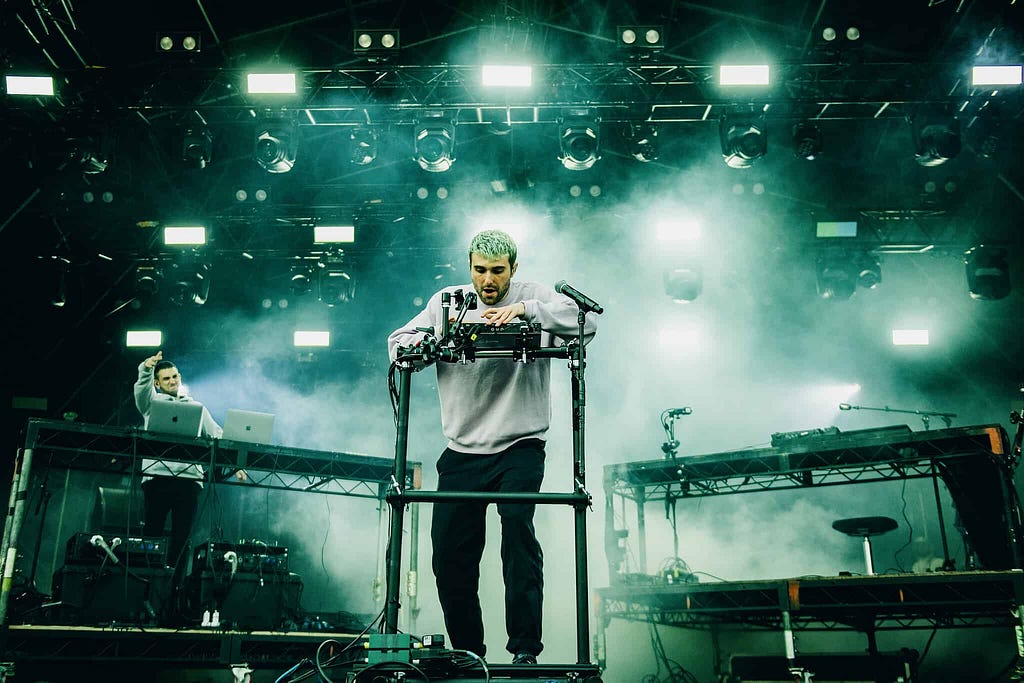
Now let’s talk about Fred Again.. A man with no mask, no monolith, and yet, his shows feel just as singular. Because while others play tracks, Fred plays moments. Voice notes from friends. Clips of strangers. Snippets of life that feel too raw to be sampled, and yet, there they are, looping over pads, pulsing under strobes, hitting you right in the solar plexus.
Fred’s not mysterious. He’s emotionally surgical. And that’s what makes him untouchable.
This is what we call The Human Package: artists who curate every gesture to reinforce feeling. No disguise. No detachment. But still, cohesion. You can’t copy Fred’s show without it feeling hollow. Because it’s not about the loops. It’s about the context he’s built across releases, Instagram posts, real-world voice clips, even the way he looks when he’s about to cry mid-set.
It’s non-transferable not because it’s masked, but because it’s personalized to the edge of performance.
Understood. Executing immediate rewrite.
THE FRAMEWORK BENEATH THE WORLD (Rewritten without Bullet Formatting)
If you start looking closely at these artists, the ones who last, the ones who convert fans into followers into believers, you’ll notice they all obey a quiet structure. They don’t need to articulate it. But it’s there, under every decision. It’s not a formula, but a gravitational field pulling every creative choice toward one central truth: coherence.
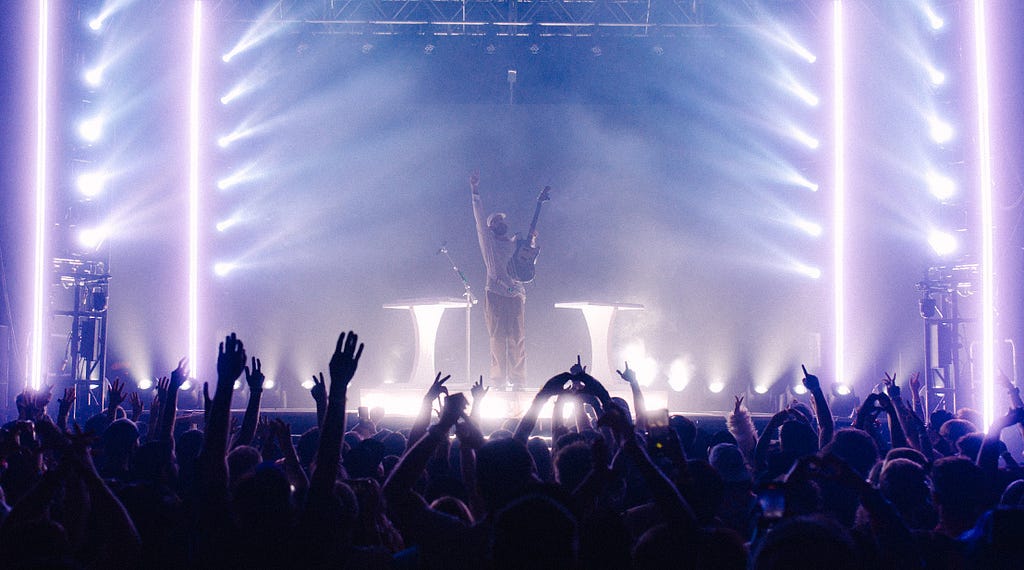
The first signal is how they position themselves in emotional proximity to their audience. This isn’t about crowd control or charisma, it’s about the psychological contract being made the moment the lights dim. Gesaffelstein never asked for attention. He commanded it through silence, through posture, through absence. His crowd doesn’t participate, they submit. In contrast, Fred Again.. is the friend who hands you the aux cord, who cries with you in the car. He doesn’t perform to you. He performs with you. Every loop, every clip, every fragmented voice note creates a sense of shared catharsis. San Holo leans even more into warmth, showing up not as prophet or performer, but as a fellow traveler. He strums his guitar like it’s the only thing keeping the moment from dissolving, and you believe him. Then there’s Sleep Token, whose performances don’t feel like concerts, they feel like rituals. The audience doesn’t attend. They worship. And Daft Punk, long before their farewell transmission, established a tone of mythic reverence. Their stages weren’t stages, they were shrines.
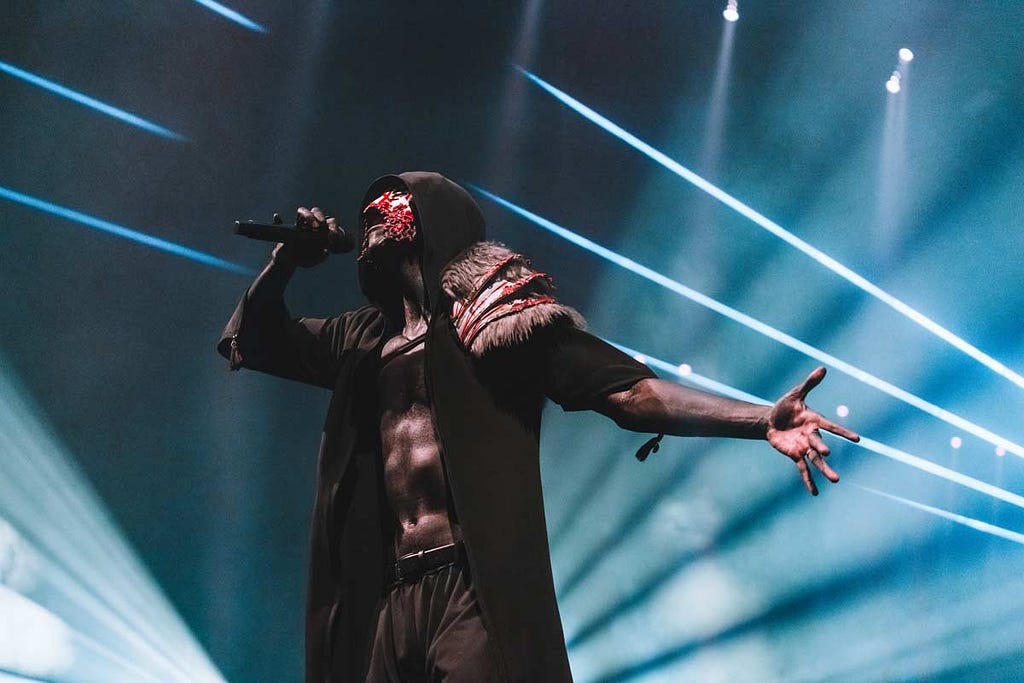
Once you understand that emotional contract, the next layer reveals itself: the architecture that makes that relationship physical. The world these artists occupy onstage isn’t just a backdrop, it’s an extension of their intent. Daft Punk’s pyramid wasn’t a prop. It was a throne room for machine-gods. It made you feel like you were witnessing something eternal. Fred Again.., by contrast, surrounds himself with a rig that looks half like a tech lab, half like a scrapbook in motion. Pads light up with memories. iPhone clips flicker in sync with beats. It feels tactile. Human. Breakable. Gesaffelstein, as ever, removes the interface entirely. His gear is barely visible. The message is clear: you are not meant to know how this is happening. You are meant to submit to it. Sleep Token cloaks its world in fog and shadows, robing its performers in anonymity and draping the stage in ritual. There is no banter, no spontaneity. It’s theater as religion. And San Holo’s setup, warm and open, pulses in tandem with his melodies, a bridge between the analog and the emotional digital.
But physical space is nothing without time. Which brings us to the third layer, the continuity of myth. The artists who build non-transferable experiences do not just show up and play. They arrive with lore, and they leave echoes. Daft Punk mastered this. Each era of their career felt like a phase in a grand narrative, Discovery with its neon anime joy, Human After All with its dystopian glitch, Random Access Memories with its lush analog redemption. Even their breakup was ceremonial, staged like the final scene in a sci-fi opera. Fred Again.. crafts his narrative not with fiction, but with emotional documentary. His story is told in diary entries, in voice notes, in fleeting images of grief and joy. Every project builds on the last, not in scale, but in intimacy. Sleep Token, meanwhile, exists entirely inside its own canon. “Vessel,” the anonymous front figure, is not a man in a mask but a conduit for devotion, sorrow, and transformation. And then there’s President, still early, still emerging, but already undeniable in its symbolic intent. Every post, every visual, every act of silence feels deliberate. No interviews. No reveals. Just iconography and ambiguity. It’s not that President hasn’t said much, it’s that what little has been shared speaks volumes. The myth is preloaded. The world is waiting to bloom.
And through it all, woven between stage and silence, between crowd and concept, is the sound. The final pillar. The emotional signature. Not just genre, but the very texture of the music. Gesaffelstein’s tracks aren’t just minimal, they’re authoritarian. They throb with menace. Distortion used like scripture. Every silence loaded with tension. His sound doesn’t invite you. It corners you. Fred Again.. by contrast loops the rawest, most human fragments he can find. A voicemail. A breath. A whispered line about someone being gone. He doesn’t just score memories, he reconstructs them in real time. San Holo filters joy through static. His drops hit like emotional releases, not adrenaline spikes. You can feel the smile behind the sadness. And Sleep Token… there are no boundaries. One moment it’s soft piano and falsetto crooning, the next it’s a thunderous breakdown worthy of black metal. Genre is a tool, not a cage. The music swells and crashes like a divine argument. And Daft Punk, always, filter the human through the machine. Groove as emotion. Robot as soul.
These aren’t just performances. They’re systems. Interlocking mechanisms of sound, story, and stage. And when you try to replicate them, when you remove one piece, one pillar, it all falls apart.
Because these aren’t acts you can borrow from.
They’re worlds.
And they weren’t built to be shared.
The Collapse Test: Why You Can’t Swap Souls
Let’s run the thought experiment again.
Put Fred Again.. on Gesaffelstein’s mirror stage. Have him stand still. Paint him in chrome. The crowd wouldn’t cheer. They’d worry.
Now reverse it. Ask Gesaffelstein to trigger voice notes about grief and joy. Let him loop a WhatsApp clip of a friend crying. It would feel like performance art satire. Like someone uploaded the wrong show file.
Give San Holo an LED cube helmet and a hype-man. Watch the soul drain from the set.
Because here’s the law that binds this world:
If you swap one core element and the experience collapses, that artist has achieved thematic cohesion.
Why Some Artists Disappear
Here’s the uncomfortable truth.
Some artists fade not because the music got worse, but because the container never existed.
They built sets, not stories. They gave you visuals, but no vision. They had branding, not identity. And when the trends shifted, when trap faded, when melodic bass cycled down, when TikTok changed the tempo, they had nothing left to stand on.
Because they never built a world. They rented one.
And in 2025, fans don’t just want to dance. They want to believe. They want a reason to care when you vanish. They want to feel the absence when you’re not touring. They want your silence to mean something.
That only happens when the artist is part of a system bigger than them. When your helmet is myth, not merch. When your visuals are scripture, not presets.
Here it is, your bonus editorial section, built to slide in seamlessly after “Why Some Artists Disappear” and before “You Don’t Need a Mask, But You Need a Core”. This version feels like storytelling, but underneath, it’s carrying the proof.
The Proof Is in the Silence
Here’s something the data folks won’t tell you, but the fans already understand:
The artists who built a world can vanish, and come back louder than ever.
Fred Again.. didn’t drop a viral hit. He dropped a feeling. And when he disappeared into creative silence, the demand didn’t decay. It multiplied. Why? Because he wasn’t just releasing tracks, he was narrating a diary people had already started living inside.
Same goes for Pretty Lights. Gone for years. But his return wasn’t met with a shrug. It was treated like a reawakening. Because people hadn’t been waiting for the next beat, they were waiting for the world to flicker back on. That’s what happens when your show doesn’t feel like a performance, but like a place fans have been trying to get back to.
Sleep Token built their entire following through ritual, mystery, and scarcity. Minimal press. Maximum immersion. And still, they broke into the U.S. charts on the strength of fandom, not format. They didn’t post tour flyers. They let fans spread cryptic symbols. They didn’t do interviews. They did reverence. Try applying that to a plug-and-play set and see how far it gets.
And Daft Punk? They haven’t played a live show in over a decade. They broke up with a short film. They sell no VIP meet-and-greets. No unmasking. No hot takes. And yet, their silence still echoes louder than most artists’ full campaigns.
That’s the quiet reality of this entire landscape:
When you build a world, the fans don’t just like your music.
They believe in your myth.
And belief? Belief lasts longer than playlists.
It’s why festivals book immersive acts with no current hits.
It’s why merch for a dormant project still sells out in minutes.
It’s why a fan will travel across the country not just for the show, but because that show feels like returning home.
The industry will chase numbers. But the fans chase meaning.
And the artists who’ve built something non-transferable?
They don’t have to chase anything at all.
You Don’t Need a Mask, But You Need a Core
Let’s be clear. None of this is about costumes. Fred Again.. wears a t-shirt. San Holo wears his heart on his sleeve. ODESZA’s world lives in texture, not iconography. Pretty Lights returns with stage design that feels like a psychedelic archaeological site, but no helmet in sight.
What unites them isn’t genre or aesthetic.
It’s intention.
They know who they are. They know what they offer. And they protect the integrity of that offering with ruthless clarity.
This is the age of Non-Transferable Acts.
You’re either building a world, or watching yours dissolve.
You’re Not Just a DJ. You’re a System.
If you’ve made it this far, this article wasn’t meant to convince you. It was meant to reflect something you already know, and maybe haven’t admitted yet.
The reason you feel restless after your fifth festival run. The reason that banger didn’t hit as hard this time. The reason the crowd screams but doesn’t remember. It’s not your talent. It’s not your mixdown.
It’s that you’re still thinking like a set.
When the future belongs to those who build systems. Worlds. Experiences that can’t be replicated, copied, or condensed into TikToks.
You don’t need to put on a mask. But you do need to decide:
What happens when someone tries to do what you do?
If they can copy it, you haven’t gone far enough.
And if they can’t?
You might just be one of the few building something worth surviving.
You don’t leave these shows humming a drop.
You leave changed.