Between 2005 and 2014, a generation of producers rewrote the blueprint for modern dance music. They didn’t invent EDM, it was already alive and pulsing through the veins of house, techno, trance, and rave culture decades before. But what they did was something else entirely: they gave it new dimension. They turned drops into emotions, sound design into storytelling, tracks into songs.
They gave the world its festival anthems, its emotional peaks, its most euphoric drops. And then, for reasons both personal and systemic, many of them disappeared. Their names faded from posters. Their sounds stopped showing up in playlists. But they were never forgotten, not by fans, not by artists, and not by the culture they helped build.
Today, quietly and without fanfare, the pulse is returning. This is the story of the ones who reshaped the sound, and why the world might finally be ready to hear them again.
The Forgotten Architects
Between 2005 and 2014, a generation of electronic artists built the skeleton of modern dance music, with little expectation of credit, and even less thought of longevity. These weren’t pop crossovers or festival mascots yet. They were kids with laptops, renegade synths, and a reckless kind of vision, one that took the rave out of warehouses and uploaded it into the bloodstream of a global youth movement.
They changed everything. And then they disappeared.
Justice’s 2005 track “Waters of Nazareth” didn’t chart. It didn’t need to. It was the first thunderclap of bloghouse, distorted, punk, blown-out on purpose. In the words of one retrospective, it was “the single most punk thing you could do in the mid-’00s… make fucked-up club bangers on your laptop.” That track was chaos with a French accent, and it was the blueprint for what would become the sweaty, swaggering sound of dance music for the next five years. Bloghouse gave us the DNA for acts like Boys Noize, Bloody Beetroots, MSTRKRFT, Crookers, even the early work of Diplo and A-Trak. It didn’t just move crowds. It moved the Overton window of what was considered “music production.”
And it’s still echoing. In 2023, Gen Z TikTok users started sampling tracks like Cascada’s “Everytime We Touch”, a mid-2000s eurodance anthem once considered embarrassing by tastemakers, and turning it into choreography gold. The track became a trending audio clip again, nearly two decades later, because kids were hearing it unfiltered. Not as cringe. Not as kitsch. Just… euphoric. One viral comment put it best: “This song is so epic. I wasn’t even born when it dropped.” Somewhere between irony and awe, the next wave of ravers is picking up where the last one left off.
You can feel that energy in the sets too. When Skream, one of dubstep’s earliest architects, started folding NERO’s “Innocence” (2011) back into his 2023 club sets, it wasn’t just nostalgia. It was a signal. That era’s sound still hits, still fills the floor, still matters. And it’s not just NERO. Tracks like “Language” by Porter Robinson, “Clarity” by Zedd, or “Strobe” by deadmau5 never really left, they just went dormant. Now they’re returning with new weight, new reverence. Not as artifacts, but as masterworks. The generation that grew up on them is grown now, and the kids just discovering them are treating them like sacred texts.
Even the “joke” songs from that era proved foundational. “Harlem Shake” by Baauer (2013) became a cultural detonation with no label backing, no rollout, and no radio support, just pure YouTube chaos and SoundCloud virality. It was arguably the first true meme-driven global chart hit. And it came from a bedroom producer in Brooklyn. That energy, the DIY virality, the sample-heavy weirdness, the humor inside the drop, is the godparent of everything happening now in the SoundCloud-to-TikTok pipeline. Baauer didn’t become a household name, but his influence is tattooed on the culture’s spine.
It took years, but the world is starting to realize what these artists did. They built the emotional range of modern dance. They proved you could headline a festival without a record deal. They turned personal sound design into genre movements. And now, finally, they’re being cited as influence, sampled by the next wave, rediscovered by kids, and celebrated in lineups that once left them behind.
They may not have gotten their flowers in the moment, but the garden’s blooming now. And the roots are unmistakably theirs.
Quarantine Protocol
In early 2020, the music world flat-lined.
One day, the calendar was packed with festivals, tour dates, release plans, and stage builds. The next, it was blank. COVID-19 didn’t just close venues, it severed the lifeline that electronic music depends on: the gathering.
Live shows weren’t just a revenue stream. For EDM artists, they were the point. The club, the stage, the festival grounds, that’s where the music lived and breathed. That’s where identities were built. And suddenly, it was gone.
The shutdown was total. Ultra Music Festival? Canceled. Tomorrowland? Canceled. Coachella, EDC, Creamfields, Movement, all gone. Clubs shuttered. Tours scrapped. DJs watched their year evaporate in days. The numbers were staggering: the global live events industry lost over $30 billion in 2020 alone. According to Pollstar, concert revenue dropped 78% compared to the year before. But stats don’t capture the real damage. Not fully. Because this wasn’t just about lost income. It was about lost connection.
For dance music, that’s lethal. EDM isn’t passive. It’s not a background genre. It thrives in bodies, in motion, in collective memory. And when movement became a health risk, the culture it supported had nowhere to go.
The dominoes fell fast. Album rollouts were delayed. Merch launches pushed. Label budgets froze. Music that was meant to drop in tandem with tours got held hostage in hard drives. Release calendars became guessing games. Even the biggest names hit pause: Skrillex, who had been teasing his return since 2019, quietly shelved his album when COVID hit, staying locked in the studio instead. And for every superstar who postponed a rollout, there were hundreds of mid-tier or indie artists who simply couldn’t afford to wait. Some disappeared entirely.
And behind all of it, behind the numbers and strategy shifts, was grief. The emotional collapse was real. DJs who had been on the road for a decade suddenly had nowhere to be. No sets to prep. No cities to fly to. No roar of the crowd to tether them to purpose. What do you do when the thing that gives you identity vanishes overnight?
Some artists livestreamed DJ sets from their kitchens, clinging to routine. Others hosted Zoom writing sessions, trying to stay creative. Some just disappeared. One documentary, Distant Dancefloors, summed up the moment plainly: “The psychological and social impact of the shutdown is still being processed. Many in the scene felt abandoned, or worse, irrelevant.”
Because this wasn’t just about missing a festival season. It was about missing a season of your life. For younger artists, it was supposed to be their breakout year. For veterans, it was a long-awaited comeback delayed indefinitely. For some, it was the end of the road, and they didn’t even get a final set.
And the world didn’t notice. Not really. Because pop stars could pivot to livestreams. Rappers could drop an album from quarantine. But EDM? EDM needs people. Together. Sweating. Screaming. Feeling the same drop at the same time.
When the world stopped moving, dance music lost its gravity. And the silence that followed wasn’t just quiet. It was existential.

Stasis Lock
When the pandemic finally eased, not everyone returned to the stage with a triumphant drop and confetti blast. For many artists, especially those who came up during EDM’s original boom, the silence stretched long past the lockdowns. And for some, it still hasn’t broken.
You could see it in the timelines. Artists who had once dominated festival rosters and YouTube sidebars went years without a release. Three, four, sometimes even nine years of digital silence. Fans took to Reddit threads and comment sections asking: “Where did they go?” “Why did they stop?” The answer, more often than not, wasn’t burnout. It was bureaucracy.
Behind the scenes, these artists weren’t inactive. They were writing. Recording. Evolving. They just couldn’t release any of it. One analysis captured the reality with brutal clarity:
“Countless producers are sitting on unreleased music because the label owns it, and won’t release it. They can’t move on. They can’t drop. They can’t grow. The contract didn’t kill their creativity. It just put it on ice.”
That freeze is a hangover from the label rush of the early 2010s, when EDM became a global commodity overnight and labels went on signing sprees, locking in artists before the long-term consequences were clear. And now, a decade later, many of those contracts are still in effect. Still ironclad. Still muzzling the very voices that built the scene in the first place.
The emotional toll of this “lockout” is hard to overstate. Imagine pouring yourself into an album during lockdown, your most honest, necessary work in years, only to be told it’s shelved. Or worse, that it needs to be more “playlist-friendly.” Artists lost momentum, yes. But more than that, they lost connection. They lost time with their fans. Time with themselves. Years passed, and the music that could’ve kept them present was instead buried in legal inboxes.
Some started to speak out. Monstercat veterans like Tristam and Feint revealed publicly that they can’t even remix or revisit their early work, because they don’t own the masters. The duo Pegboard Nerds, facing the same wall, began re-recording old hits under slightly altered titles just to escape the licensing web. It’s a workaround, sure. But it’s also a reminder of just how far artists are forced to go just to reclaim something that was always theirs.
Even the icons weren’t immune. NERO, the dubstep trio who helped define the dark cinematic edge of 2010s EDM, released their first new album in nearly nine years in 2024. The gap wasn’t creative. It was logistical. Personal pursuits, industry red tape, and shifting platforms slowed everything to a crawl. Similarly, French house heroes Justice went nearly eight years without a proper LP before staging a full return in 2024. These weren’t cases of creative drought. They were the result of infrastructure collapse. Of waiting for the right moment, or permission, to move again in a system that no longer knew what to do with them.
And so, a generation waited. While the industry adapted to TikTok cycles and viral trends, many of EDM’s original architects were left behind. Not because they were out of ideas, but because the road back was cluttered with contracts, expectations, and timelines they didn’t control.
As new stars rose, many of the old ones watched from the wings. Not retired. Not forgotten. Just paused.
That’s the thing about the electronic scene, it never really closes the door. But for those who built it, who once held the spotlight and the sound design crown, the invitation back has often felt unspoken. Like they were locked out of the house they designed. Left watching as strangers rearranged the furniture.
But now, cracks are forming. The locks are rusting. And some of the originals are picking up the keys again.
Signal Acquired
It didn’t happen all at once. But if you were paying attention, the signs were unmistakable.
After years of silence, sidesteps, and stalled careers, the architects of EDM’s golden era are starting to show face again. Not as nostalgia acts or heritage bookings, but as relevant voices in a culture that remembers them. Quietly at first, then with conviction, they’ve begun reappearing on festival posters, in DJ crates, and on fans’ playlists, like familiar stars blinking back into view.
In 2024, the legendary French duo Justice, the architects of the bloghouse era, made their long-awaited return with “Hyperdrama,” their first full album in nearly a decade. It didn’t just land, it roared. The album drew critical acclaim, earned multiple Grammy nominations, and kicked off a massive tour that will run through 2025. This wasn’t a one-off reunion. It was a reaffirmation of relevance. Their return signaled something deeper to the industry: these aren’t relics from a past trend. These are still giants. And the people never stopped listening.
That same year, their Ed Banger Records peer Busy P took the stage at the Paris 2024 Olympics opening ceremony, flanked by longtime French house pillars Cassius. A moment once reserved for pop royalty or orchestral bombast was handed, instead, to dance music’s original underground vanguard. There was no mistaking the message: welcome back.
And it didn’t stop in France. Across the global circuit, the pulse has started to shift. Coachella, once the barometer of electronic relevance, has quietly opened its arms to both throwback flavors and their modern descendants. Niche acts channeling the 2000s electro sound, once dismissed as passé, are now drawing headline attention. Even Steve Aoki, one of the era’s most polarizing figures, brought back his iconic L.A. party series Dim Mak Tuesdays, this time reuniting with The Bloody Beetroots to announce a 20th-anniversary tour. It wasn’t a gimmick. It was a milestone. One that sold out faster than anyone expected.
Around the same time, NERO, a trio synonymous with cinematic dubstep and sweeping emotion, returned with their first album in nearly ten years and mapped out a tour comeback that reignited long-dormant fanbases. They weren’t just welcomed back. They were missed.
Even the titans are feeling the shift. Skrillex, after a decade off the main stage at Ultra Music Festival, made a thunderous return in 2023. No fanfare. No nostalgia play. Just one of the best sets of the weekend, raw, live, genre-agnostic chaos. The crowd knew every word. And Swedish House Mafia, once thought to be gone for good, didn’t just reunite. By 2022, they were headlining again. The reunion was framed not as a farewell, but as a reintroduction.
But the most telling signals aren’t always in the headlines. They’re in the algorithm.
Over the past few years, classic EDM tracks, the anthems of the 2010s, have started creeping back into DJ sets, trending charts, and streaming suggestions. Festival-goers born after “Clarity” or “Levels” still scream the words when they hear them live, sometimes louder than for new releases. At the height of this resurgence, Spotify’s own data showed a measurable increase in plays for legacy artists like Avicii, Alesso, and Swedish House Mafia. In response, Spotify created a dedicated playlist called “Headliners”, filled entirely with EDM classics from the boom years. It immediately gained tens of thousands of followers, and according to internal metrics, had an exceptionally low skip rate, even among younger users.
That’s not nostalgia. That’s demand.
These are the green shoots of a second coming, not a mainstream movement yet, but a groundswell. Viral remixes of old tracks. Reddit threads analyzing decade-old synth presets. Festival “throwback” stages that end up pulling bigger crowds than the mainstage. Artists who once defined a moment now finding that moment looping back around, this time with reverence.
After a long winter, the lights are flickering back on. And the ones who built the sound are finally stepping back into the warmth.
Return Trajectory
For years, the music industry felt like a closed circuit. If you weren’t part of the system, you weren’t in the game. But something has changed, something subtle, foundational, and permanent. The walls have thinned. The gates are rusting open. And for the veteran artists left waiting on the other side, the road back doesn’t run through the old machine anymore.
It’s quiet. But it’s real.
In the post-pandemic rebuild, a growing number of electronic artists have chosen not to return through the label lobby. Instead, they’re opting out, choosing a different path, one built on ownership, autonomy, and community-driven momentum. As one editorial put it bluntly:
“Electronic artists are turning down contracts, walking away from majors, and building empires on independence.”
And they’re not being idealistic about it. They’re being strategic. The infrastructure has caught up. Platforms like DistroKid, TuneCore, Bandcamp, and Stem now make it possible to distribute music globally, instantly, with zero middlemen. You don’t need an A&R department. You need a SoundCloud account, a fanbase, and a good enough drop.
In 2023, independent labels and self-released artists captured a stunning 31% of the electronic music market, according to the IMS Business Report. That’s not a fringe rebellion. That’s a third of the entire scene choosing to exist outside of the major-label structure. The playing field hasn’t just leveled, it’s shifted entirely.
And that shift favors the quiet comebacks.
In this new landscape, discovery doesn’t require a co-sign or a marketing rollout. It requires resonance. Over 70% of Spotify streams now come from algorithmic and fan-driven discovery, not curated playlists. Which means: if the music hits, it finds people. No gatekeeper required. On TikTok, the numbers are even more staggering, by 2024, 84% of all global Billboard charting songs were already viral before a label ever touched them.
That reversal of power has flipped the release model on its head. The new rule?
Blow up first. Sign later, if at all.
And many aren’t signing at all.
Artists like San Holo didn’t wait for a major to come calling. He built his own imprint, bitbird, self-released “Light,” and watched it rack up over 172 million streams on Spotify alone. It wasn’t a fluke, it was proof of concept. That one song turned into a self-sustaining label, a global brand, and a launchpad for dozens of like-minded producers.
Bass icon Rezz followed a similar path. After two albums under a major, she stepped away and launched her own platform, HypnoVizion, in late 2022. Her team called it “a step in the DIY direction.” Fans called it overdue. She called it freedom.
And that’s the difference now. Independence isn’t a risk. It’s a strategy. Artists no longer need to ask for permission. They can drop a single when it’s hot, ride the algorithm, engage with fans in Discord, drop NFTs or vinyl, launch a Patreon, stream on Twitch, license music on their own terms, and do all of it without splitting 85% with a boardroom that doesn’t know what Ableton is.
This isn’t about bitterness. It’s about practicality. The major-label machine still exists, and for some, it still works. But for the artists who built their audience before the machine cared, who’ve been locked out, shelved, or slow-walked for years, the indie path is no longer the backup plan. It’s the blueprint.
And they’re following it. Quietly. Consistently. Successfully.
The road is open now. The tools are in place. The audience is listening.
You don’t need a comeback campaign.
You just need to come back.
Loud and Clear
Perhaps the most important signal in all of this, the real green light, hasn’t come from press cycles or festival bookings. It’s come from the audience.
Quietly, patiently, consistently, fans have been sending the same message:
We still want you.
Not in a flashy petition. Not in a viral campaign. But in the numbers. In the comments. In the echo of every decade-old drop that still shuts down a stage.
Even Gen Z, digital natives raised in a post-album era, are discovering the euphoria of the 2005–2014 EDM wave and treating it like buried treasure. It’s not ironic. It’s not tongue-in-cheek. It’s reverence. On TikTok, teenagers are cutting dance edits to Avicii and Calvin Harris tracks that once defined millennial college nights. Festival edits of Zedd’s “Clarity” or Alesso’s “Years” get the same explosive response as current hits, sometimes bigger.
Industry analysts are calling it an “EDM nostalgia wave,” but that undersells it. This isn’t a retro fad. It’s a course correction. A return to something that people didn’t realize they missed until it started to creep back in.
Spotify saw this coming. Their “Headliners” playlist, originally a celebration of EDM classics, was meant to be a curiosity. Instead, it exploded in popularity, driven by listeners in their early twenties. It had an unusually low skip rate, which, in streaming terms, is the equivalent of thunderous applause. These weren’t people reliving memories. Many were making them for the first time.
And then there are the search stats.
Between 2019 and 2023, the most-searched EDM lyrics in the world weren’t from new festival anthems. They weren’t viral TikTok edits. They were the lyrics to David Guetta’s 2011 hit “Titanium.” A song over a decade old, written in the heyday of radio EDM, still being typed into Google more than anything released last year. That’s not nostalgia. That’s demand.
And when these artists do return, the reaction speaks for itself. When NERO dropped new music in late 2023, nearly a decade after their Coachella headlining slot, the media called it “a comeback long-awaited and deeply felt.” Longtime fans flooded the comments. YouTube threads filled with hearts and tears. People who had aged out of clubbing suddenly planning to fly across the country just to hear Promises live again.
You see it everywhere:
Tweets that say, “Where did this kind of EDM go?”
Comments on old uploads that read, “They don’t make them like this anymore.”
Reddit threads asking if “the 2010s were peak electronic music.”
And in the crowds? The loudest singalongs often erupt during decade-old tracks. Festival stages now dedicate full segments to “EDM Classics.” And when “Don’t You Worry Child” or “Strobe” drops in a closing set, the phones come out, not because it’s novel, but because it still hits something true.
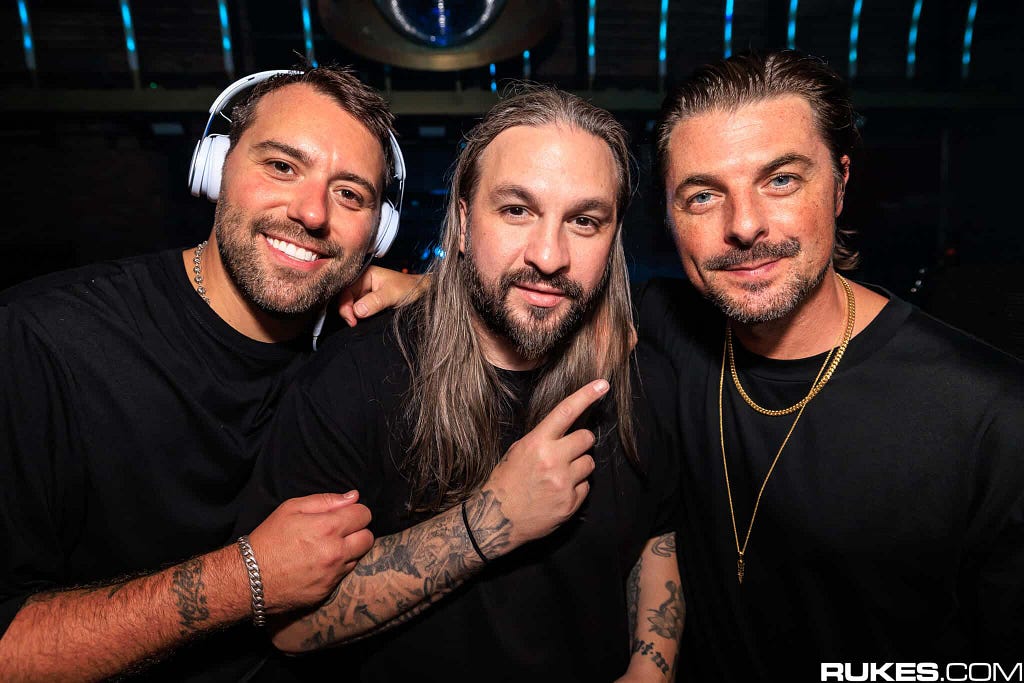
The cultural shift is real. These artists are no longer seen as yesterday’s headline, they’re seen as the missing piece in a dance scene that’s evolved but maybe lost a little of its heart along the way. The melodies, the emotion, the collective euphoria, that signature feel of early EDM, it didn’t vanish. It just went quiet. And now, people are listening for it again.
There’s even a new saying floating through fan communities:
“EDM isn’t dead. It was just taking a break.”
And the numbers suggest that break is over.
This isn’t a rallying cry. It’s not a trumpet blast calling veterans back to war. It’s a gentle nod. An open door. A quiet, collective breath from the crowd that says:
If you come back now, if you show us what your sound looks like today, we’re ready. We never stopped being ready.
The stage isn’t just waiting.
It’s welcoming.