
Reverb
How to use shimmer reverb without burying the source
Shimmer reverb introduces pitch-shifted energy into a reverb tail. For a spacious result that leaves the source readable, establish the ordinary reverb first, add the pitched layer gradually and control how much tail remains under each new phrase.
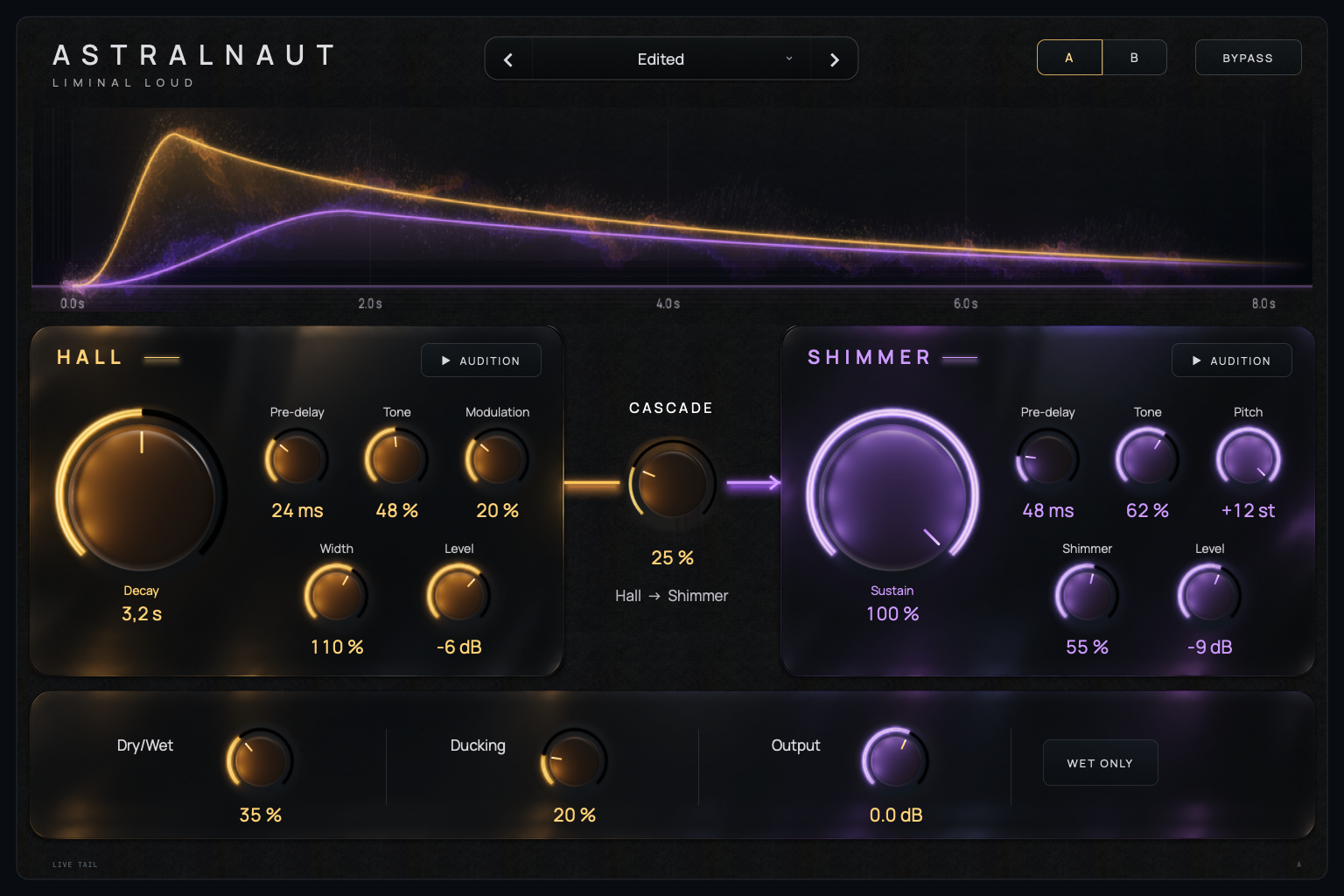
Astralnaut has independent Hall and Shimmer engines. Cascade changes what feeds Shimmer, while Ducking helps make space for incoming audio. Those controls let you separate the shape of the room from the evolving pitched atmosphere.
Build the Hall return first
Loop a phrase with a pause at the end. Bring up Hall while keeping the Shimmer return low. Choose the Hall Decay and Tone against the actual arrangement rather than judging only the final ringing note.
Pre-delay separates the start of the return from the source's attack. Astralnaut's guide suggests trying 25–60 ms on a vocal as a starting experiment. Listen for intelligibility and timing; a longer gap can sound detached from a fast part.
Hall Modulation changes motion inside its delay network. It controls depth rather than a separate modulation rate. Use enough to animate a sustained tail, then check whether that movement is distracting beneath a more detailed phrase.
Add pitch and feedback separately
- Raise Shimmer Level. Make the second return audible before assessing its character.
- Set Pitch to +12 semitones. Compare that octave-up setting with unison at 0.
- Increase the Shimmer amount. Listen for the shifted component becoming part of the feedback texture.
- Adjust Sustain and Tone. Set how the tail retains energy and how bright the repeated pitched material remains.
Shimmer at 0% still leaves unpitched reverb. Use Shimmer Level at its minimum when you want that return muted. Sustain at 100% is also not an infinite-freeze switch. Those distinctions make it easier to isolate what each engine contributes.
The general idea of shimmer is explained in Valhalla's shimmer notes. Each plugin has its own routing and controls, so transfer the listening approach rather than copying numeric settings between products.
Compare parallel and cascaded space
At low Cascade, Shimmer receives more of the dry source. At high Cascade, it receives more of Hall's return. Start with the engines as separate layers, then increase Cascade to hear the Hall become material for the pitched tail.
Hall Level changes the signal available to Shimmer when Cascade is raised. Rebalance Shimmer Level after adjusting the routing. The crossfade is linear in signal amplitude and does not guarantee matched loudness.
In serial routing, both pre-delays can contribute to the Shimmer arrival. If the atmosphere seems late, check both stages before shortening the tail. Timing and decay are separate decisions.
Keep the source at the front
Use Ducking when the wet sound masks the next word, chord or drum hit. Compare a sustained passage with its following gap. Aim for a return that sits back while the source is active and remains useful in the space afterward.
Finally, lower the listening level and compare with the drums and bass playing. If the tail still obscures the phrase, reduce the wet amount, darken the return or shorten it before adding more processing. Save a quieter alternative for denser parts of the arrangement.